


-
Buy our wine
Free shipping in France on orders over €200
- Our wines and crémants
- Sustainable Winegrowing
- Discover us
- News


 English
Understand the different styles of Alsatian wines
Do you really know what a dry wine is? Or a semi-dry wine? Do you know the criteria for a wine to be considered sweet? And what about a sweet wine, or even a syrupy wine?
It's not always easy to navigate and understand the different styles of still wines. These characteristics are linked to sweetness, the amount of residual sugar still present in the wine after fermentation, but also to the wine's acidity and alcohol content. We'll give you the keys to finally understand.
What is a dry wine?
Dry white wines
A dry white wine is a wine with the lowest sugar content. The residual sugar does not exceed 4 grams per liter or 9 grams per liter for the most acidic wines. These wines are very fresh and refined with excellent aging potential.
What about red wine?
Red wines are naturally dry. In general, there is little or no residual sugar remaining after the fermentation process.
Bestheim dry wines
What are Bestheim dry white wines? They are all Rieslings: Riesling des Chasseurs de Lune or Riesling Rayon de Lune, but also Grand Crus such as Riesling Grand Cru Schlossberg and terroir wines.these are fine wines, very mineral with a certain acidity that brings freshness. They have notes of fresh fruit, citrus, white flowers, and yellow fruit for the most complex vintages from specific terroirs.
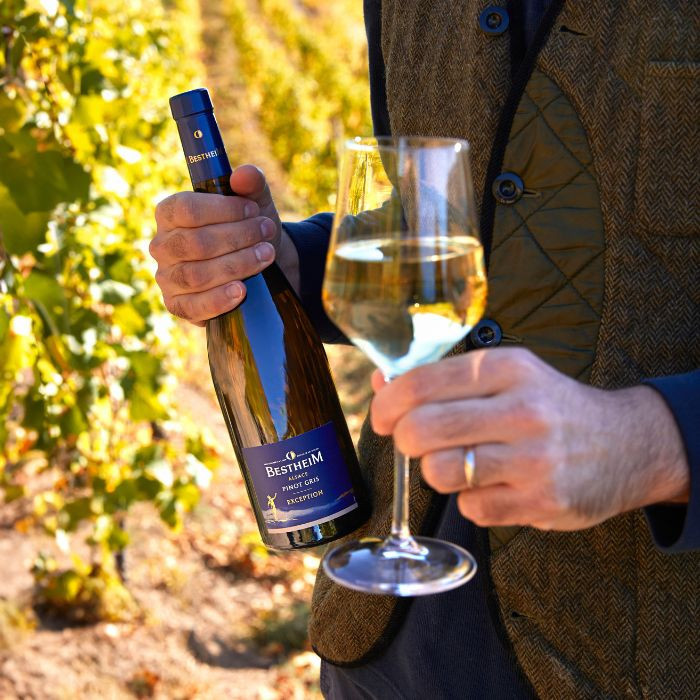
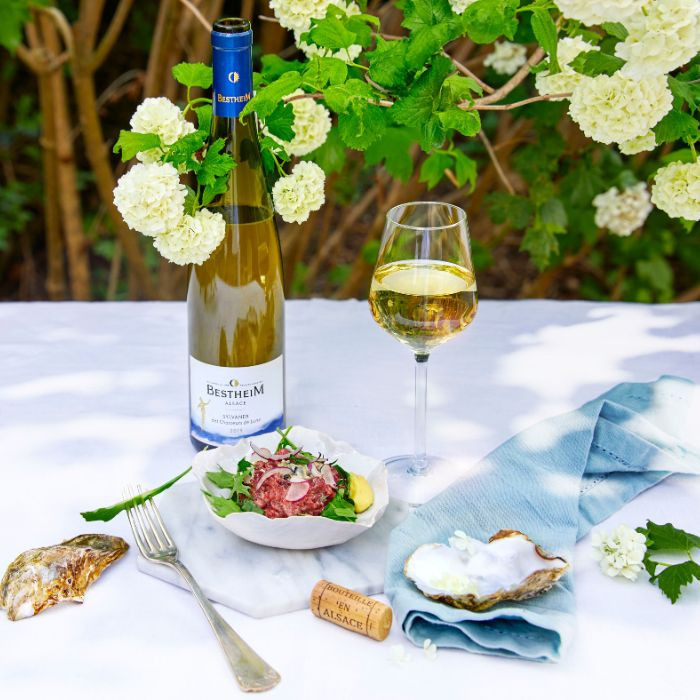
Among the dry white wines, you will also find Sylvaner and Klevener from Heiligenstein.
As for red wines, Pinot Noir Exception, Pinot Noir l'Impatient and Pinot Noir les Chanteaux are considered dry red wines.
What is a semi-dry wine?
A semi-dry white wine is a wine with a sugar content of between 9 and 18 grams per liter. This medium sweetness is noticeable when the wine is young but will gradually fade as it ages in the bottle.
Bestheim semi-dry wines
Pinot Gris is a grape variety that produces demi-sec wines when not grown in terroirs such as the Grands Crus. Among the semi-dry white wines are Pinot Gris des Chasseurs de Lune and Pinot Gris Rayon de Lune. These are round, easy-drinking wines with aromas of yellow fruit, candied fruit (apricots) and dried fruit.
what is a sweet wine?
A sweet wine is a wine with a residual sugar content of between 18 and 45 grams per liter. When tasted, this sweetness is easily detected on the palate.
Bestheim sweet wines
The Gewurztraminer des Chasseurs de Lune, and the Gewurztraminer Grand Cru Mambourg are sweet white wines. These are wines with great aromatic richness, a full and fruity palate with notes of exotic fruits (pineapple, lychee), spices, and rose.
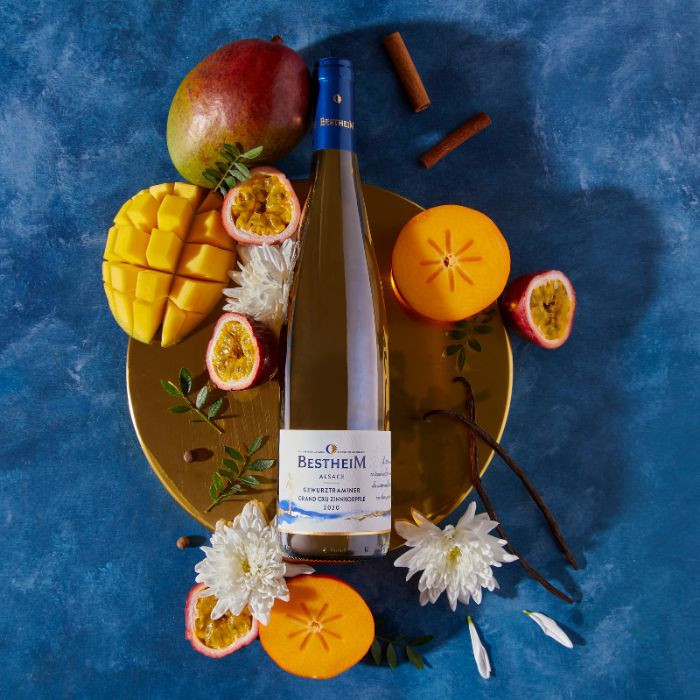
The Grand Cru Kaefferkopf is also a sweet wine with floral aromas (rose and violet) and candied fruit (mirabelle plum), complemented by smoky notes and a lovely freshness thanks to hints of lemon.


What is a sweet wine? A dessert wine?
Sweet and fortified white wines are wines with a sugar content exceeding 45 grams per liter. Sweet wines are most often produced from overripe grapes or from specific grape varieties and terroirs. This distinguishes them from fortified wines, whose grapes, also harvested when overripe, are affected by noble rot, known as botrytis cinerea.
Bestheim sweet wines
Some Grands Crus can be considered sweet white wines, such as Pinot Gris Grand Cru Zinnkoepflé.
The stars of sweet wines are late harvest wines: Riesling and Gewurztraminer Vendanges Tardives. These wines most often have notes of candied fruit, apricot, pineapple, and dried fruit. On the palate, the balance between freshness and roundness is preserved with a hint of honey that rolls across the palate.
Bestheim sweet wines
These are the Sélections de Grains Nobles: Gewurztraminer Sélection de Grains Nobles.
Understanding the different styles of Alsace wines allows you to better appreciate their richness and nuances. Dry, semi-dry, sweet, or syrupy, each wine reveals a subtle balance between sweetness, acidity, and aromas. From dry Riesling to sweet Gewurztraminer, not forgetting the prestigious Vendanges Tardives and Sélections de Grains Nobles, Bestheim wines offer a complete palette of emotions to discover, depending on your tastes, your dishes... and your desire to share.


