


-
Buy our wine
Free shipping in France on orders over €200
- Our wines and crémants
- Sustainable Winegrowing
- Discover us
- News


 English
How should you enjoy a Pinot Noir?
Pinot Noir should be savored with care. Temperature, glass, and aeration: a few simple steps reveal the full finesse of this red wine.
Pinot Noir is a light and fruity red wine with fine, silky tannins. Its delicacy makes it sensitive to tasting conditions. If served too cold, it closes up. If served too warm, it loses its balance. Served in the right glass, at the right temperature, and with proper aeration, it reveals its red fruit aromas and aromatic complexity. Here are the steps to enjoy it properly.
The 4 Steps to Tasting a Pinot Noir
Appearance: Tilt the glass against a white background. Observe the color: ranging from light ruby to deep garnet, depending on the cuvée and vintage. Pinot Noir has thin skins, so its color is often lighter than that of a Cabernet or a Syrah.
The Nose: First, take a whiff without swirling the glass. You’ll notice subtle floral notes and fresh red fruits (cherry, raspberry). Then swirl to release deeper aromas: blackberry, blackcurrant, and sometimes spicy or woody notes in cuvées aged in barrels. At Bestheim, our Exception , reveals intense notes of cherry and ripe raspberry after aeration.
On the palate: Take a small sip and inhale gently. Note the fine, silky tannins, the freshness, and the fruitiness. Pinot Noir does not seek raw power. It focuses on balance and finesse. The finish lingers on red fruits, sometimes enhanced by vanilla notes in oak-aged cuvées.
Evolution in the glass: Pinot Noir changes as you taste it. The aromas open up, and the texture softens. Take your time. A good Pinot Noir should be savored slowly, not downed in one gulp.
The Typical Aromas of Pinot Noir
The aromatic profile of Pinot Noir varies depending on the terroir, winemaking techniques, and the wine’s age.
Young (Chasseurs de Lune, Rayon de Lune):
- Fresh red fruits: cherry, raspberry, strawberry, red currant
- Black fruits: blackberry, blackcurrant
- Floral notes: violet, peony
Aged (after a few years of aging):
- Forest floor, mushrooms, truffle
- Leather, spices, pepper
- Animal notes in the most mature wines
Barrel-aged (Exception, L'Impatient):
- Vanilla, toast, subtle oak
- Morello cherries, prunes, smoky notes
These aromas are directly influenced by the winemaking and production choices for Pinot Noir: maceration time, ageing method, and plot selection.

Serving Pinot Noir: Temperature, Glass, and Aeration
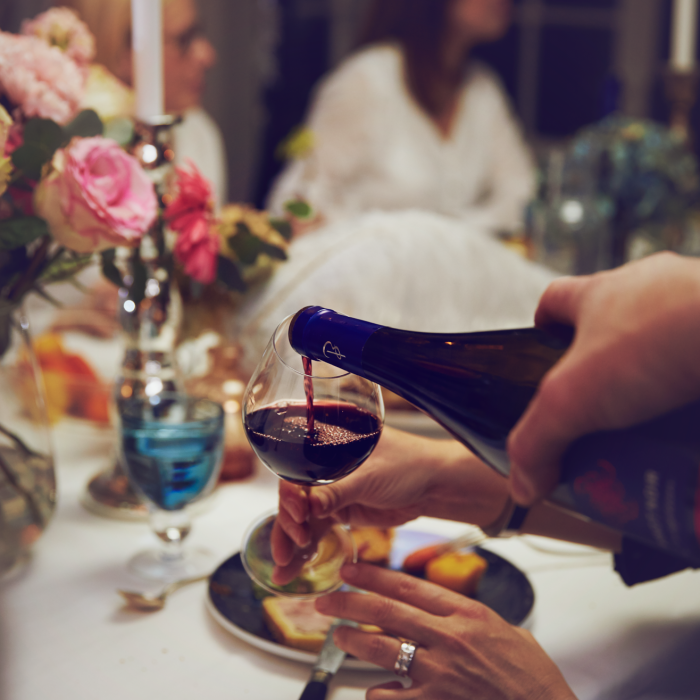
Temperature: between 14 and 16°C. Not from the fridge, not at room temperature (anything over 20°C is too warm). Place the bottle in the refrigerator for 20–30 minutes if it’s too warm.
Glass: A wide-bowled wine glass that concentrates the aromas. Pinot Noir needs space to express itself.
Aeration: Open the bottle 15–30 minutes before tasting. Structured cuvées like L’Impatient benefit from being decanted for 15 minutes. Lighter wines (Chasseurs de Lune) are best enjoyed immediately upon opening.
Serving temperature and storage conditions directly influence what you perceive in the glass. A few degrees make all the difference.
What to Pair with Pinot Noir?
Pinot Noir is versatile at the table. Its lightness and delicate tannins allow it to complement a meal without overpowering it.
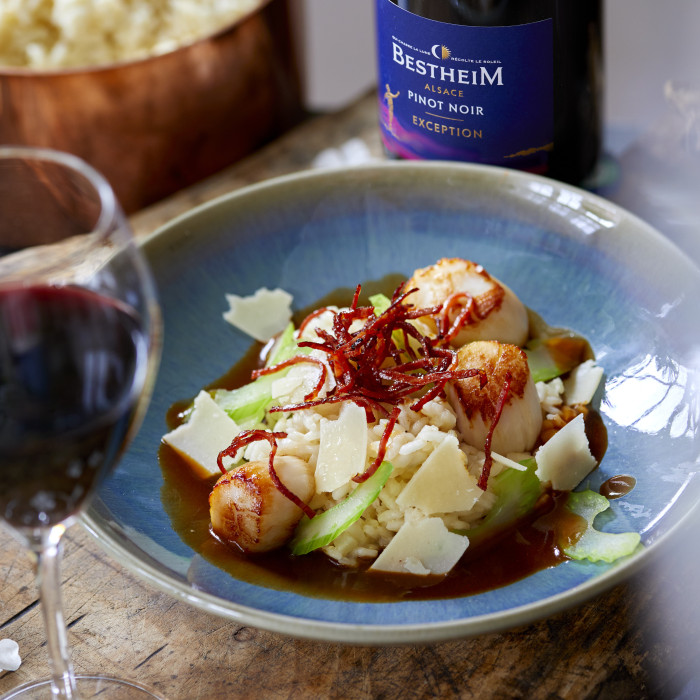
- Red meats and game: rib roast, duck breast, stew
- Roasted poultry: chicken, capon, turkey
- Aged cheeses: Munster, Comté, Reblochon
- Slow-cooked dishes: beef bourguignon, coq au vin
- Fondue or raclette: an Alsatian pairing that works
There are many great pairings with Pinot Noir. Find all the suggestions in our guide on what to eat with Pinot Noir.
Is Pinot Noir a good red wine for beginners?
Absolutely—its soft, subtle tannins, fruity profile, and light body make it an ideal red wine for beginners. It doesn’t overwhelm the palate or burn with alcohol. It’s a great starting point for discovering red wines before moving on to more full-bodied varieties.
Should Pinot Noir be refrigerated after opening?
Once the bottle is opened, reseal it tightly and place it in the refrigerator. Opened Pinot Noir can be stored for 3 to 5 days. After that, the aromas fade and the wine can become flat. Storage and serving temperature play a key role in preserving Pinot Noir’s aromas after opening.
What sets Pinot Noir apart from other red wines?
Its finesse. Pinot Noir is a light-bodied red wine with fine, silky tannins and a lighter color than most reds. It doesn’t aim for raw power but rather elegance and aromatic complexity. It is also a grape variety deeply tied to its terroir: the same Pinot Noir, planted on two different plots, will yield two distinct wines. To understand its origins and history, check out our guide to the Pinot Noir grape variety.


