


-
Buy our wine
Free shipping in France on orders over €200
- Our wines and crémants
- Sustainable Winegrowing
- Discover us
- News


 English
À quelle température servir un Pinot Noir d'Alsace ?
The serving temperature of an Alsatian Pinot Noir is very important when tasting it, but just how important? The first rule to remember: serve your Pinot Noir between 14 and 16 °C, and avoid tasting it straight out of the refrigerator. Discover our serving recommendations for serving it at the right temperature, storing it under the best conditions, and fully appreciating all its aromas.
That’s right—the serving temperature directly influences your tasting experience. Pinot Noir is a delicate grape variety, renowned for its finesse. The serving temperature has a significant impact on its expression: if served too cold or too warm, it won’t fully reveal its aromas and balance.
A few simple guidelines will help you fully enjoy your Bestheim Alsace Pinot Noir: the right temperature at the time of serving, allowing the wine to breathe, and proper storage conditions before and after opening. We’ll explain everything.
What is the ideal serving temperature for Pinot Noir?
The answer is simple: between 14 and 16°C. It’s within this range that Pinot Noir best reveals its red fruit aromas, its freshness, and the finesse of its tannins. But you don’t necessarily have a thermometer on hand for wine tasting, and besides, it seems a bit out of place during a meal.
But what does a Pinot Noir at 14 to 16°C actually mean? Ideally, you should adjust the temperature of your bottle based on where it’s been stored. If it’s too warm, a quick trip to the refrigerator is usually enough. Then open the bottle about fifteen minutes before tasting so the wine can fully express itself. Once poured, swirling the wine in the glass a few times also helps reveal its full range of aromas.
This grape variety is particularly sensitive to serving temperature. If your wine is too cold, it closes up, releasing fewer aromas and making the tannins more pronounced. Conversely, if the wine is too warm, the alcohol takes over and the wine loses its balance.
Beware of two common pitfalls:
- The refrigerator: A Pinot Noir served at 6 or 8°C loses much of its aromatic expression.
- Room temperature: In a room heated to 20 or 22°C, the wine seems heavier and less fresh.
To achieve the right temperature:
- If the bottle is too warm, place it in the refrigerator or in a bucket of cold water for 30 minutes.
- If it’s too cold, take it out about 1 hour before serving and let it come to room temperature.
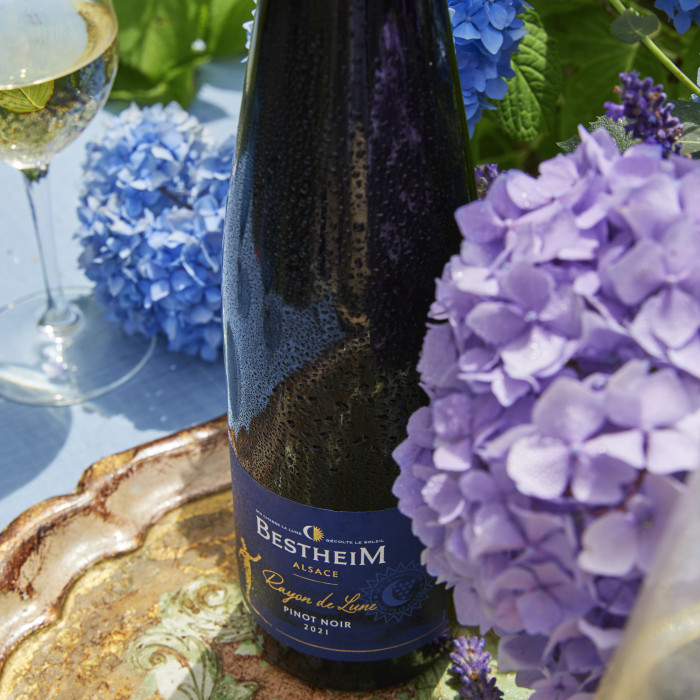
At Bestheim, our Pinot Noir wines—Chasseurs de Lune, Rayon de Lune, Exception, and L’Impatient—reach their full potential between 14 and 16°C.
Note: Crémants d’Alsace Rosé made from Pinot Noir are best enjoyed cooler, between 7 and 9°C.
How do you let a Pinot Noir breathe before serving?
Before tasting, open the bottle 10 to 15 minutes in advance. This exposure to air helps soften the tannins and release the wine’s red and black fruit aromas. For faster or more pronounced aeration, you can pour the wine into a carafe. This is called “decanting.”
This should not be confused with decanting, which involves separating a wine from its sediment (rare in a young Pinot Noir). Decanting is often the right choice for an Alsatian Pinot Noir, and it also adds an aesthetic touch if you have a beautiful decanter!
The need for aeration depends on the cuvée. A young, fruity Chasseurs de Lune is often best enjoyed immediately upon opening, without particularly lengthy aeration. A more structured wine like L’Impatient, from the Vorbourg Grand Cru, benefits from spending at least 15 minutes in a carafe to reveal its full depth.


How long should Bestheim Pinot Noir be aged?
Alsace Pinot Noir isn’t a wine meant to be left in the cellar for 20 years. Allow 2 to 5 years of aging for all our cuvées to fully enjoy their fruitiness and silky tannins.
As for Crémant d’Alsace Rosé wines, such as our Brut Rosé or Grand Prestige Rosé, these aren’t wines meant for long-term cellaring either. Two years at most! Drink them young to preserve their fine bubbles and freshness.
The vintage also plays a role. Hot, dry years produce more structured Pinot Noirs capable of aging longer. Cooler years emphasize fruitiness and freshness; these should be enjoyed sooner rather than later.
How should you store Pinot Noir?
To preserve your bottle, there are two different approaches depending on whether it’s open or not.
Before opening:
- Stable temperature between 10 and 14°C: Wine doesn’t like temperature fluctuations! Even if it’s a little warmer than recommended, the number one factor in storage is temperature stability!
- Keep it away from light: UV rays degrade the aromas, and the wine won’t taste the same. Also, don’t store the bottles on their sides to keep the cork moist.
- No temperature fluctuations (which accelerate oxidation); do not store in the refrigerator (too cold, too dry, vibrations)
Ideally, store your Pinot Noir in a wine cellar or a spot in your home where the temperature remains cool and stable. If that’s not possible, choose a place protected from heat and temperature fluctuations, such as a pantry, a closet, or a well-insulated garage.
After opening:
Once the bottle is opened, the wine begins to oxidize. Recork it tightly (using the original cork if intact, or an airtight wine stopper) and place the bottle in the refrigerator. An opened Pinot Noir will keep for 2 days, or 5 days under ideal conditions. The aromas evolve day by day: the fruitiness fades, and the wine becomes more closed.
Alsace Pinot Noir: Our Best Food and Wine Pairings
Pinot Noir is one of the most versatile red wines for the table. Thanks to its fine tannins and natural freshness, it pairs equally well with meats and certain aged cheeses.
The most classic pairings remain:
- Roasted or grilled poultry, lean red meats, game birds
- Mushroom stews
- Aged hard cheeses
At Bestheim, a Pinot Noir from Chasseurs de Lune pairs effortlessly with roasted poultry or a charcuterie platter. More structured cuvées, such as our Exception or L’Impatient, naturally complement a cut of beef, duck breast, or game.
To learn more, check out our comprehensive guide: What to Eat with Pinot Noir? as well as our tips for winter dishes like fondue and raclette.
What Are Tannins in Red Wine?
Tannins are compounds naturally found in the skin, seeds, and sometimes the stems of grapes. They provide structure and a sense of texture on the palate. Pinot Noir is known for its generally fine and silky tannins.
Pinot Noir or Pinot Gris: Which One to Choose?
Pinot Noir is a fruity red wine, ideal with red meats, charcuterie, or certain cheeses. Pinot Gris is a fuller-bodied white wine, often chosen to pair with white meats, dishes with sauce, or foie gras.


