


-
Buy our wine
Free shipping in France on orders over €200
- Our wines and crémants
- Sustainable Winegrowing
- Discover us
- News


 English
Sweet Alsace wines: pleasure in a bottle!
Soft, syrupy, late harvest, noble grape selections...When looking for a sweet wine, it is important to know its specific characteristics. In Alsace, we are rather spoiled when it comes to this category of wines.
Semi-dry, sweet, or syrupy wine?
Wines are classified according to the grams of residual sugar (which is not converted into alcohol) they contain.
This gives us the following classification:
- Dry: maximum 4 g/l sugar
- Semi-dry: between 4 g/l and 12 g/l of sugar
- Sweet (or semi-sweet): between 12 g/l and 45 g/l of sugar
- Sweet (or dessert): at least 45 g/l of sugar, with no upper limit
When we talk about sweet wines, we are therefore mainly referring to moelleux and liquoreux wines. There are different techniques and conditions (particularly climatic) for producing sweet wine: in Alsace, we mainly refer to Vendanges Tardives, Sélection de Grains Nobles, and Vins de Glace.
Late Harvest
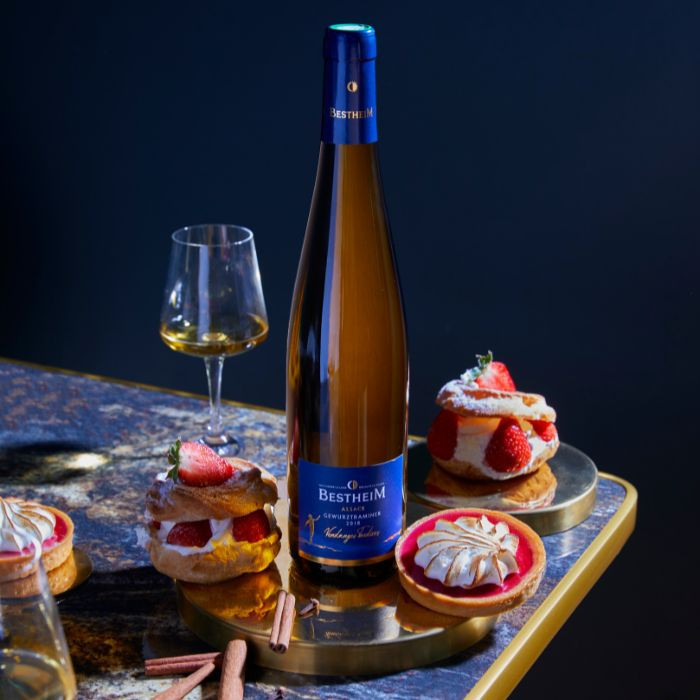
The term "Vendanges Tardives" is very strictly regulated in Alsace. To obtain this designation, the following conditions must be met:
- The grapes must have a minimum potential alcohol content at harvest: Riesling and Muscat: 235 g/liter (14% potential alcohol), Pinot Gris and Gewurztraminer: 276 g/liter (15.3%).
- They must be harvested by hand.
- Only Gewurztraminer, Muscat, Pinot Gris and Riesling grape varieties are permitted.
- The I.N.A.O. carries out checks on the day of the harvest.
- The wine must not be a blend.
- The bottle must indicate the name of the grape variety and the vintage.
- No enrichment is permitted.
- The wine may not be released for sale before June 1 of the second year following the harvest.
The grapes used to make "Vendanges Tardives" are harvested when overripe: they are left on the vine for a few weeks after the "traditional" harvest to dry gently in the autumn wind and sun. The sugar content can then reach a concentration of 270 g per liter!
Sélections de Grains Nobles
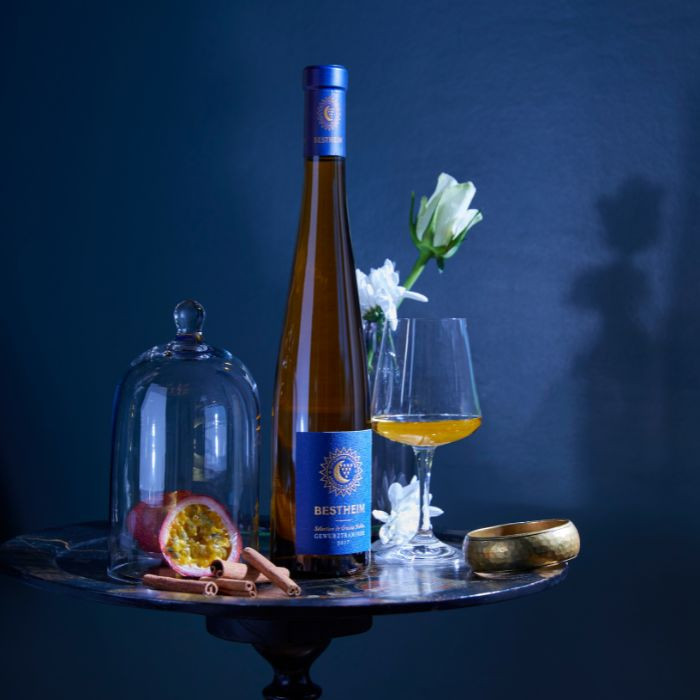
To obtain the "Sélections de Grains Nobles" designation , the technique is very different from that used for "Vendanges Tardives." In the case of these wines, the overripe grapes must be affected by what is commonly known as noble rot, or Botrytis Cinerea. This only develops under specific climatic conditions: a foggy morning followed by a sunny afternoon.
The specifications are the same as for "Vendanges Tardives," but "Sélections de Grains Nobles" offer a higher sugar concentration. Thus, theminimum sugar content for Sélections de Grains Nobles is around 100 g/L.
These production conditions make Sélections de Grains Nobles rare vintages, produced on average once every ten years.
Ice wines
Produced from grapes frozen on the vine, ice wines are rare and exceptional. In fact, the temperature must be -7°C before these grapes can be harvested and pressed. As a result, ice wines are only produced in years that offer the necessary climatic conditions.
Discover our selection of sweet wines and let yourself be tempted by these divine beverages!


The sweet and syrupy wines of Alsace are true treasures, born of demanding expertise and an exceptional terroir. Whether it's the rich and velvety Vendanges Tardives or the Sélections de Grains Nobles, with their rare aromatic concentration, these sweet wines offer a unique sensory experience. To be enjoyed on their own, as a dessert or with exceptional dishes, they illustrate all the nobility of the Alsace vineyards. A concentrated pleasure... to be savored slowly.


