


-
Buy our wine
Free shipping in France on orders over €200
- Our wines and crémants
- Sustainable Winegrowing
- Discover us
- News


 English
Is Riesling a dry white wine?
An iconic grape variety of Alsace, Riesling is mainly vinified as a dry white wine. But its palette is much broader: depending on the terroir and harvest conditions, it can also produce semi-dry, sweet, or late harvest wines.
Riesling is one of the noble grape varieties of the Alsace wine region. Mainly known in the region for its mineral character, it is often associated with a dry white wine. However, there are also semi-dry and sweet Rieslings! Riesling has a very broad aromatic palette, which depends on the terroir where the grape is grown.
The origins of Riesling
It was in the 9th century that Louis II the German planted this aromatic grape along the Rhine. The name Riesling was only given to it later, and comes from the verb "riesen," which means "to flow" in German (the grape variety was then susceptible to coulure, or coulure). It was not until the second half of the 19th century that the cultivation and vinification of Riesling developed in our region.
What are the aromas of Riesling?
Riesling has the characteristic of perfectly reflecting its terroir. Thus, a Riesling planted in cool climates will produce floral wines with citrus aromas, such as our Riesling Grand Cru Mambourg, while a Riesling grown in warmer areas will develop stone fruit notes (apricot, peach).
An excellentwine for aging, Riesling can be kept for decades while retaining its freshness! Over the years, some Rieslings develop aromas of honey and brioche, while others become petrol-like.
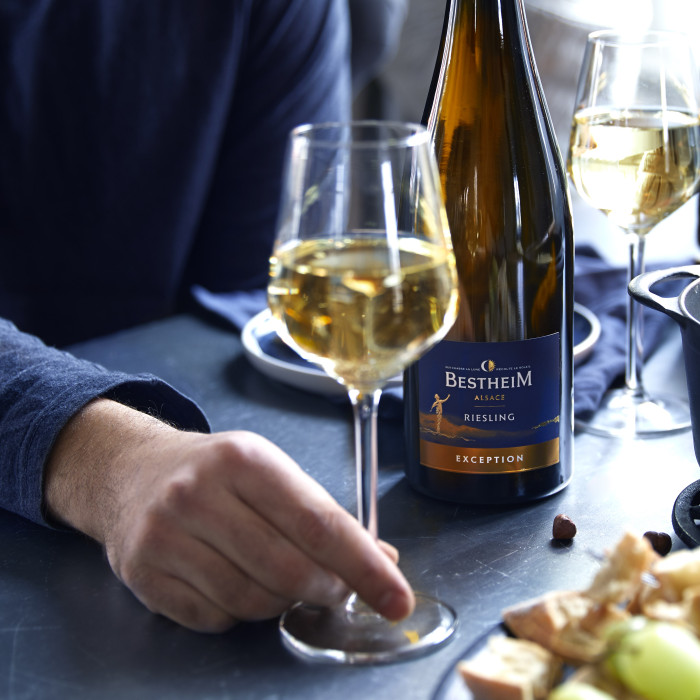
The terroir of Riesling therefore plays a very important role in the wine's aromas. Made from a selection of plots in the Kientzheim-Kaysersberg valley, our Riesling Exception expresses all the elegance of its terroir: a powerful wine with mineral notes combining fruitiness and minerality.

Riesling and sweetness
Although Riesling is known as a dry white wine renowned for its minerality and freshness, it can also produce semi-dry or sweet wines when aged or harvested differently.
When weather conditions allow, Riesling can be harvested later, leaving the berries to overripen on the vine: this is known as a late harvest.
These rarer wines are obtained by pressing whole botrytised grapes. The over-ripening of Riesling berries produces a sweet wine with citrus notes and a complex nose of candied fruit.
Very fruity, yet retaining a lovely freshness, our Riesling Vendanges Tardives is the perfect accompaniment to pan-fried foie gras or a lemon dessert.
Enjoy!
Need advice on food and wine pairings? Not sure what to serve with a Riesling? We've got some ideas for you in our article"What to eat with a Riesling?"


Riesling is often synonymous with dry, elegant white wine, appreciated for its minerality and liveliness. But this noble grape variety offers tremendous diversity: depending on the terroir, the winemaking style, or the ripeness of the grapes, it can also reveal beautiful roundness and even a delicious sweetness in its late harvest versions. A nuanced Alsace wine to (re)discover according to your tastes!


