


-
Buy our wine
 Free shipping in France on orders over €200
 - Our wines and crémants
- Sustainable Winegrowing
- Discover us
- News



 English

The ABC of food and wine pairing
Wine should enhance your meal and the dishes that comprise it. It contributes to creating a subtle and somewhat magical combination that will make this moment shared with friends or family a memorable one. However, there are a few basic rules to follow to ensure that the pairing of food and wine is perfect. Here is a selection.
Rule #1: Always go for higher quality
You have chosen to serve different wines at each stage of your meal: you must ensure that the previous wine is not regretted. For example, servinga Riesling Grand Cru as an aperitif followed by a Sylvaner with your sauerkraut is not recommended!
Rule #2: Avoid starting the meal with a sweet wine
It is very tempting to give in to the siren call of a Gewurztraminer, for example , as an aperitif. This is not a good idea, as your taste buds will immediately be overwhelmed by the sugar and alcohol. Of course, the traditional pairing of foie gras with a sweet or syrupy wine is superb, but you can also make a bold choice by serving a more mineral white wine such as Riesling.
Rule #3: Respect the nobility of wines and dishes
Cooking morels, lobster, truffles, and game means you're taking a high-end approach to your meal. Of course, the wine must be chosen accordingly: you'll need great, highly structured wines to achieve a sublime pairing.
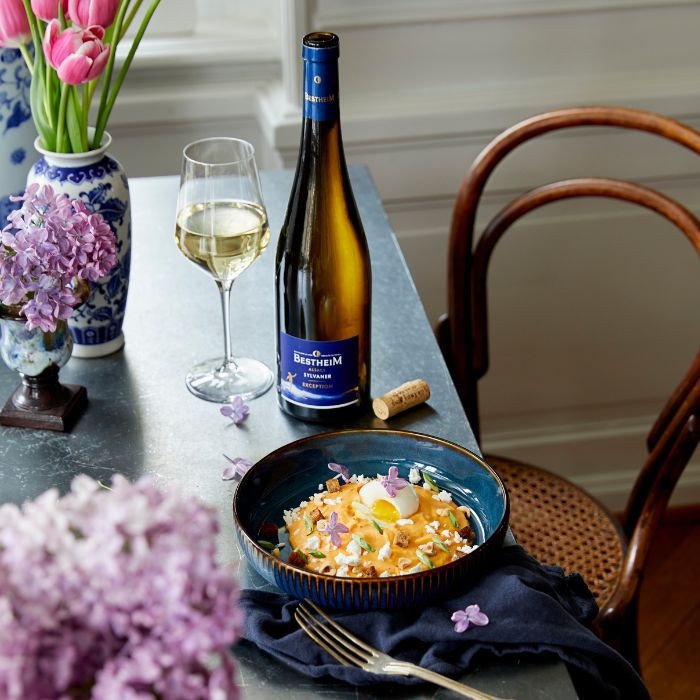
Wine should enhance your meal, and every single dish in it. It contributes to forming a subtle and somewhat magical union, turning a shared moment with friends or family into an unforgettable memory. For this symbiosis of food and wine to be perfect, however, it is important to follow a few basic rules. Here are a few of them.
Rule no. 1: always follow good with better
If you choose to serve different wines with each course, you must ensure that your guests do not hanker after the previous wine. We do not recommend serving a Sylvaner with your sauerkraut after a Riesling Grand Cru for the aperitif!!
Rule no. 2: avoid starting the meal with a sweet wine
It is very tempting to succumb to the charms of a Gewurztramineras a pre-prandial drink, for example. But it would not be a good idea, since your taste buds would immediately be saturated with sugar and alcohol. Of course, the traditional pairing of foie gras and medium-sweet or sweet wines is superb, but you can also make a complete break with a more mineral wine such as Riesling.
Rule no. 3: treat your special wines and ingredients with the respect they deserve
When you cook morel mushrooms, lobster, truffles or game, you are taking a premium approach to your meal. You should choose your wine accordingly: you will need fine, well-structured wines for perfect harmony.
Rule no. 4: match your dishes with wines of the appropriate age
Young, fresh and crisp wines go well with uncooked foods such as summer salads. Conversely, older, more complex and sophisticated wines are better suited to autumn and winter dishes like mushrooms and game.
Rule no. 5: give contrasts a chance
It might seem a surprising choice to serve a sweet wine with Roquefort cheese, but it works supremely well. Why? Sweet and savoury flavours come together, with the creaminess of the wine and the fat of the cheese complementing each other perfectly. Likewise, white meat in a cream sauce can also be matched with a sweet wine.
Rule no. 6: don’t forget colour harmonies
White wine is traditionally offered with fish…. which is generally white in colour. Red wineis served with a cut of beef… which is red. It might seem obvious, but co-ordinating the colours of food and wine works rather well. As evidence of this, you would probably opt for a red with a tuna steak and a white with chicken in a sauce! And why not try a Crémant Brut Rosé with gravlax or salmon maki rolls...
Rule no. 7: showcase the terroir
There are favoured wines for all regional dishes. Cahors and duck confit, Riesling and sauerkraut, Bandol and aioli, and Gewurztraminer and Munster cheese are all tried and tested pairings. You will remain in familiar territory with these matches, with the security of knowing that your dish and your wine work well together.
Enjoy!


Rule #4: Match the age of the wine to the appropriate dishes
Young, lively, and fresh wines go well with raw dishes such as summer salads. Conversely, older, complex, and elaborate wines are better suited to fall and winter dishes such as mushrooms or game.
Rule #5: Focus on contrasts
Serving a sweet wine with Roquefort cheese may seem surprising, but it works perfectly. Why? The sweet/salty combination comes into its own here, as the creaminess of the wine and the fattiness of the cheese complement each other perfectly. Similarly, white meat in a cream sauce can also be paired with a sweet wine.
You now have all the keys to becoming a pro at pairing food and wine!


